mision_1

FreshBooks vs Xero: Choosing accounting software 2025

xero vs freshbooks

It’s available online 24/7, which is great for businesses that have unusual operating hours. You’ll just submit a support ticket, where you can attach any files that may make things easier to troubleshoot. If necessary, you can also give a Xero support person access to your account so they can take a closer look.

  1. The features included with FreshBooks are dependent on the plan.
  2. The maximum is 20, which can be quite limiting to a busy professional.
  3. It includes both the monthly discount outlined above, as well as an additional 10% discount for selecting a yearly plan.

Account Information

The best accounting software received top marks when evaluated across 10 categories and more than 30 subcategories. Learn more about how we rate small-business accounting software. This ensures that businesses are matched with accountants that suit their specific needs, and gives them access to the financial and accounting reports they need. Many FreshBooks customers have service-based businesses that have them constantly on the go. And FreshBooks is a unique accounting software program in that it allows you to bring your software along with you while serving billable clients. Predictable costs without the need for add-ons or additional app integrations and transparent pricing that fits your budget.

Xero also offers some excellent optional add-ons at good value. Those interested in a full trial can get access to a 30-day free option. For instance, five types of budgets in managerial accounting since Xero only includes project tracking with its most expensive plan, it’s a better pick for product-based freelancers and businesses than for service-based business owners. It also lacks multicurrency support for all but its most expensive plan.

FreshBooks Review 2024: Features, Pros And Cons

This means you don’t need a 30-day trial like FreshBooks offers. Even though it is a free option, Wave Accounting offers many of the features you need to run your business, including free invoicing, unlimited expenses and receipts. Get a snapshot of your overall revenues so that you can properly report your business income. It categorizes expenses so you can run reports and get totals for your deductions. All this data is at your fingertips so that you can share it with your accountant. The higher-tiered plans do offer accountant access, making it even easier for a business owner to share necessary data with their tax preparer and reduce the chance of errors.

Bank reconciliation

All you have to do is save your credit card, banking or other payment details online in the FreshBooks application so you’re automatically billed each time an invoice comes due. Imagine doing this without invoicing software—dealing with paper invoices and receipts and having to keep track of phone and address records separately. The Lite plan offers the essentials and is best for people who only have a couple of clients and do not have a business model that focuses on attaining more. Still, you’re able to send payments with credit cards and bank transfers and track unlimited expenses, some of the key tools freelancers need. This plan also allows you to easily keep track of payroll through a Gusto Payments integration. Xero also allows companies to be paid via invoice and it can also help businesses receive payments in time by automatically debiting customers’ bank accounts whenever invoices are due.

The entire premise of Xero is cloud-based accounting, but it feels like traveling back in time 25 years when trying to get anything done with them. Don’t let the amount of data tied up in your current accounting software stop you from finding the right fit for you and your business. With Easy Switch, our specialists will handle the heavy lifting, moving all your important info (like expenses, invoices, and client details) from Xero to FreshBooks. Xero, on the other hand, is best for small businesses that want to take the step up from tracking expenses in Excel. It has all the functionality you need to manage transactions, calculate payments and track projects at an affordable entry point.

xero vs freshbooks

Create Xero invoices for new WooCommerce orders

Xero offers more than 80 reports, including standard financial reports, and lets you add tracking categories to monitor performance in different areas of your business. You can generate traditional financial reports, but they aren’t available with all plans. You’ll need the Plus plan to access a general ledger, trial balance or chart of accounts and the Premium plan to create any accounts payable reports. FreshBooks cloud based accounting software is built for non-accountants running small and medium sized businesses – making it easy to create invoices and get paid.

You are charged an additional month beyond your cancelation date. So either you have to plan to cancel 2 months in advance or you have to plan to pay an additional month of service after you actually cancel. Both FreshBooks and Xero are cheaper than QuickBooks while offering many of the same functionalities. QuickBooks has more inventory management and budgeting tools than FreshBooks. QuickBooks also has a more intuitive interface than Xero as well as a desktop version. Choosing which of the two is better for your business depends on your needs.

mision_1

Public Accounting: Definition, Functions & Examples

what is public accounting

All of our content is based on objective analysis, and the opinions are our own. Their pivotal role in ensuring financial accuracy and transparency is indispensable in the modern business landscape. The Chief Financial Officer (CFO) is a high-ranking executive responsible for a company’s overall financial strategy and management. They play a crucial role in business development, attracting new clients, and ensuring high-quality service delivery. By analyzing financial records, tracing funds, and evaluating financial practices, they unearth any irregularities that might indicate fraudulent activities. Forensic accounting is a specialized area where CPAs use their financial acumen to investigate potential fraud, embezzlement, or other financial discrepancies.

Certified Public Accountants

  • This advocacy ensures that the profession remains aligned with societal expectations and public interest.
  • In the 1970s, the Financial Accounting Standards Board (FASB) took over responsibility for setting generally accepted accounting principles (GAAPs).
  • A type of financial manager, financial controllers use historical data to forecast their companies’ future success.
  • Accountants without a CPA license tend to earn less with an average range between $47,138 and $82,167.

These professionals handle diverse financial services such as auditing, tax preparation, financial planning, and consultation. Job-seekers can use multiple methods to find a job, including job fairs, networking, and school career centers. Local CPA organizations sometimes hold events for current and future CPAs.

what is public accounting

Is CPA a certificate, degree, or license?

Since the Sarbanes-Oxley Act passed in 2002, accountants have been subject to tougher restrictions concerning their consulting assignments. The CPA designation became more important after the Sarbanes-Oxley (SOX) Act of 2002, which was passed partly in response to corporate financial scandals like the Enron affair. Arthur Andersen company executives and CPAs were charged with illegal and unethical accounting practices. The pass rates are low, with three out of the six possible sections having pass rates below 50%. Keeping the CPA designation requires completing a number of continuing education hours.

What does a Public Accountant do?

Framed as case studies, the TBSs provide financial records, correspondence, and other documentation that test-takers use to answer questions. All CPAs will need on-the-job training, but how much depends on where you plan to obtain licensure. The AAA, a community of accountants in academia, offers http://preiskurant.ru/stati/obespechenie-yekologicheskoj-bezopasnosti-pri-peredache-voennyx-territorij-page-2.html research and networking opportunities. The association’s website includes a job board for accounting professionals. Positions are available as an Audit Committee Chair or Audit Committee Member for public companies, private companies, not-for-profit organizations and government organizations.

what is public accounting

Public accountants, often referred to as CPAs, are the architects of financial clarity. They are professionals who have undergone rigorous training and successfully passed the CPA exam, a challenging rite of passage. These individuals possess a deep understanding https://id4.ru/top/?r=rakoviny&u=jacobdelafon of accounting principles, taxation, and auditing, making them indispensable in the world of finance. The largest employers of accountants include tax preparation and accounting services companies, finance and insurance companies, and government agencies.

what is public accounting

How do you become a CPA?

I also really enjoy the client education aspect of my work when I can help client accounting team members learn additional skills or be a resource to answer questions and resolve problems. Learners are advised to conduct additional research to ensure that courses and other credentials pursued meet their personal, professional, and financial goals. Other examples of goals include managing an accounting team, working for a large accounting firm, or starting your own business as a CPA. They calculate tax obligations or refund amounts and file the necessary paperwork.

Financial planning involves helping businesses create budgets, forecasts, and financial models to make informed decisions and allocate resources effectively. Risk management focuses on identifying and mitigating financial risks to protect a company’s assets and reputation. Business strategy consulting assists companies in developing plans to grow, expand into new markets, or adapt to changing economic conditions. Public accountants who specialize in the nonprofit sector tackle unique challenges related to maintaining tax-exempt status and preserving public trust. Nonprofits rely heavily on donor contributions and grants, necessitating accurate financial reporting to demonstrate responsible stewardship of funds. Public accountants working in the financial services sector must grapple with intricate financial instruments, risk management, and regulatory compliance.

What Is the American Institute of Certified Public Accountants (AICPA)?

  • CPA candidates must hold a bachelor’s degree and complete a number of accounting and business courses.
  • For example, if you enjoy working more directly with clients, you may find being able to assist them directly with financial planning or defend them against the IRS to be more fulfilling.
  • According to EMSI, the median advertised salary for CPAs is $90,000 across all accounting functions.
  • Many prepare tax returns for individuals or businesses and advise them on ways to minimize taxes.

We are the American Institute of CPAs, the world’s largest member association representing the accounting profession. Today, you’ll find our 431,000+ members in 130 countries and territories, representing many areas of practice, including business and industry, public practice, government, education and consulting. The required years of experience you need to take the CPA Exam vary from state to state, but most call for at least two years working in public accounting. Some states will accept other experiences, such as working in government or industry, but you will generally need more years of such experience. Most accounting majors can satisfy most of the educational requirements, although states require 150 semester hours of college credit before you’re eligible to take the exam.

Is an accounting degree worth it without a CPA?

The examination is not merely a test of knowledge; it assesses problem-solving abilities and the capacity to make sound judgments in complex financial situations. In 2021, I decided to take the next step in my accounting career journey, and I am now a self-employed accounting consultant and business advisor. I was able to put my technical accounting and client service skills to use in working with my own clients.

Accounting involves recording financial information, preparing documents relating to finance, and analyzing financial records. Public accounting focuses on financial documents that clients must disclose to the public, such as tax documents. Accounting.com is committed to delivering content that is objective and actionable. To that end, we have built a network of industry professionals across higher education to review our content and ensure we are providing the most helpful information to our readers.

Internationally, accounting professionals with similar education and credentials are called CAs, or charted accountants. Tax services encompass a wide range of activities, from preparing tax returns to advising on tax-efficient investment strategies. Public accountants in this field stay current with tax law changes, helping clients make informed decisions that reduce tax burdens while remaining https://orkse.ru/fundament/razmery-lestnicy-po-gost-2023-2023-marshi-i.htm compliant with tax codes. These organizations also adhere to specific accounting standards, such as the Financial Accounting Standards Board (FASB) guidelines for nonprofits, adding complexity to the role of CPAs in this sector. The healthcare landscape is marked by constant changes in government policies and insurance regulations, making it a challenging environment for CPAs.

mision_1

Finance for fast-growing companies

statement of retained earnings example

It is the opposite of the payout ratio, which measures the percentage of profit paid out to shareholders as dividends. The statement of retained earnings is a financial statement that reports the business’s net income or profit after dividends are paid out to shareholders. This statement is primarily for the use of outside parties such as investors in the firm or the firm’s creditors.

Why Is the Retention Ratio Important?

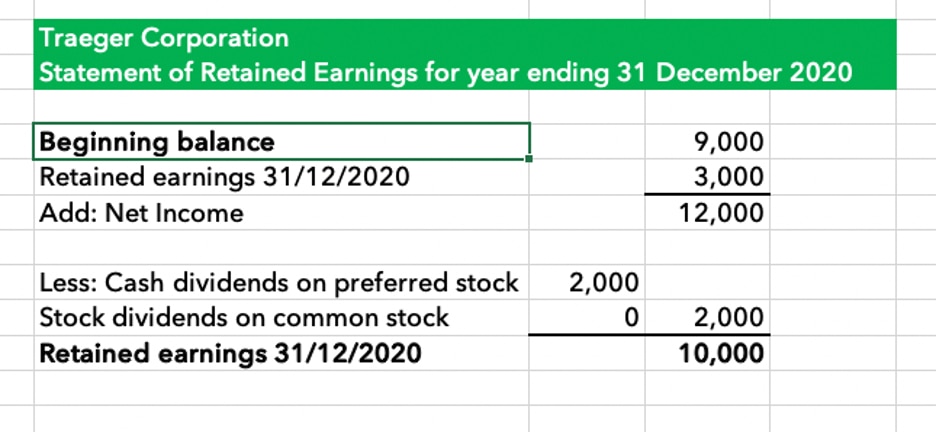
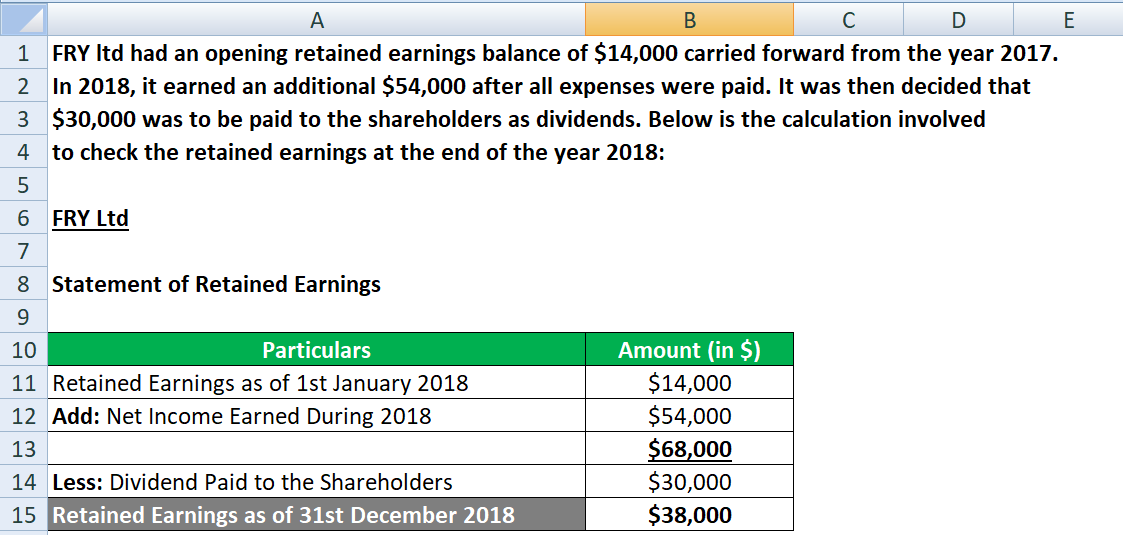
For example, if a company is considering purchasing new equipment, the model can simulate different scenarios, such as varying costs, financing options, and expected returns. This analysis aids in determining whether the investment is financially viable and aligns with the company’s strategic goals. You can also move the money to cash flow to pay for some form of extra growth. Retained earnings are calculated by subtracting a company’s total dividends paid to shareholders from its net income. This gives you the amount of profits that have been reinvested back into the business. A statement of retained earnings shows the changes in a business’ equity accounts over time.

How to Prepare a Statement of Retained Earnings: A Step-by-Step Guide with Example

For those who’ve been in the financial reporting game, this familiar number is your last performance’s curtain call, carried forward as the opening act for the new period. If this is your debut statement, then you’re starting from scratch—your opening balance is zero. Remember, your beginning balance isn’t just an arbitrary number; it embodies the company’s cumulative earnings minus cumulative dividends since day one. Think of it as a financial saga that sets the stage for the current period’s financial storytelling. To kick things off with preparing a statement of retained earnings, you start with a sprint down memory lane – the beginning balance.

Our Services

This number isn’t just another entry on the books; it’s the measure of your company’s accumulated wealth over time that hasn’t been dished out to shareholders. Dividends are the slices of the profit pie that shareholders eagerly await, representing a reward for their investment in your company. But bear in mind, this isn’t a compulsory tradition; some companies choose to reinvest profits back into the business instead.

statement of retained earnings example

However, to calculate retained earnings from the balance sheet, you take out dividends, along with net income or loss. Whenever a company generates surplus income, a portion of the long-term shareholders may expect bank reconciliation definition and example of bank reconciliation some regular income in the form of dividends as a reward for putting their money in the company. Traders who look for short-term gains may also prefer getting dividend payments that offer instant gains.

  • If the company is experiencing a net loss on its Income Statement, then the net loss is subtracted from the existing retained earnings.
  • This statement of retained earnings can appear as a separate statement or be included on either a balance sheet or an income statement.
  • At some point in your business accounting processes, you may need to prepare a statement of retained earnings, which helps people understand what a business has done with its profits.
  • Some companies don’t have dividend payouts—in that case, there’s nothing to subtract.

Financial Statement Modeling

It’s about signaling stability and foresight in your business model. Calculating the ending retained earnings solidifies your company’s financial narrative, reflecting both past decisions and setting the stage for future investments or debt management. It’s a number that tells a story, so make sure it’s penned with precision and clarity. When you subtract dividends from your net income, you’re essentially closing the loop of your retained earnings calculation. It’s a subtraction that underscores a company’s generosity and investor-centric ethos or highlights a strategic choice to harness profits for growth. The plot behind this step revolves around the outcome of your business’s operations.

Once you have all of that information, you can prepare the statement of retained earnings by following the example above. When you’re through, the ending retained earnings should equal the retained earnings shown on your balance sheet. Learn how to build, read, and use financial statements for your business so you can make more informed decisions.

Following our example, Widget Inc. begins their fiscal year with retained earnings of $15,000. The company has worked hard throughout the year, leading to a well-earned net income of $10,000. Shareholders are not forgotten, as dividends amounting to $3,000 are paid out. While the calculation itself is straightforward, the thought process behind how much to retain versus distribute in dividends reflects a company’s long-term strategic planning and fiscal discipline. It’s essential to fine-tune these numbers as they send a strong message about the company’s financial stewardship and future prospects. Walking through this example, it’s evident that Zippy Tech is maintaining a healthy cycle of profit reinvestment while also rewarding its shareholders.

The statement of retained earnings is also important for business management as it allows the firm to determine its retention ratio. The retention ratio is the percentage of net income that is retained. For example, if 60% of net income is paid out as dividends, that means 40% of net income is retained. A statement of retained earnings is a financial statement that shows the changes in a company’s retained earnings balance over a specific accounting period.

The income statement and cash flow statement are linked through net income, which serves as the starting point for cash flow from operating activities. Revenue growth is one of the most fundamental assumptions in financial projections, as it influences other forecast components like expenses, profit margins, and cash flow. Revenue forecasting estimates future sales based on historical data, market trends, and strategic initiatives. It’s the starting point for many financial forecasts, as revenue affects other components such as expenses and working capital.

Revenue is the total income earned from sales before expenses, while retained earnings are the profits kept by the company after paying out dividends over time. Pour too much into dividends, and the retained earnings dwindle, possibly signaling a lack of internal investment capital. But strike the right balance, and you’re likely to attract investments while still rewarding shareholders.

mision_1

Overapplied Overhead Definition

overapplied or underapplied overhead

One strategy is to refine the predetermined overhead rate by using more accurate and dynamic allocation bases. For example, activity-based costing (ABC) can provide a more precise method of allocating overhead by linking costs to specific activities and cost drivers. This approach helps in identifying inefficiencies and areas for cost reduction, ultimately leading to more accurate overhead allocation.

6: Determine and Dispose of Underapplied or Overapplied Overhead

  • Once the period concludes, actual overhead costs and actual activity levels are recorded.
  • Now the machine shop has to book an additional $600 of overhead expense because the original estimate what under applied.
  • Most managers want to be able to show a profit even after overhead expense, so an estimated amount of overhead is applied for each period.
  • One strategy is to refine the predetermined overhead rate by using more accurate and dynamic allocation bases.
  • The next step involves comparing the allocated overhead, calculated using the predetermined rate, to the actual overhead incurred.
  • After this journal entry, the balance of manufacturing overhead will become zero.

In a sense, the production managers came in “under budget” and achieved a lower overhead than the cost accountants estimated. In this case, XYZ Corp. will need to make an adjustment to its accounting records to account for the overapplied overhead. This could involve decreasing the cost of goods sold, or adjusting other inventory accounts depending on the company’s accounting policy. This will ensure the company’s financial statements accurately reflect the actual overhead costs incurred during the period.

Products

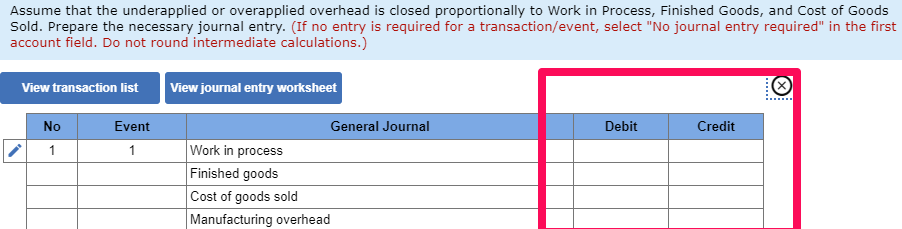
These may be explained by expected hiccups in production, business, or seasonal variation. It is useful to note that some companies may use the more accurate method, but more time-consuming, to reconcile the underapplied or overapplied overhead. That method will not only allocate the overhead to the cost of goods sold but also to the work in process inventory account and the finished goods inventory account. Effective management of overapplied overhead requires a combination of proactive planning and continuous monitoring.

overapplied or underapplied overhead

Overapplied Overhead

In this book, we assume companies transferoverhead balances to Cost of Goods Sold. We leave the morecomplicated procedure of allocating overhead balances to inventoryaccounts to textbooks on cost accounting. If not adjusted, the overapplied amount can lead to an overstatement of net income. This can have tax implications, as higher reported earnings may result in a larger tax liability. Additionally, it can affect dividend distributions, as companies might distribute more profits than they actually earned, potentially straining cash flows. Since we will be using the concept of thepredetermined overhead rate many times during the semester, letsreview what it means again.

What is Overapplied Overhead?

This will result in an excess charge of $15,000 to the cost of goods sold, if the situation is not corrected. To do so, the company’s controller debits the manufacturing overhead cost pool for $15,000, while crediting the cost of goods sold account for the same amount. The result is a cost of goods sold that incorporates only the actual overhead costs incurred during the month of March.

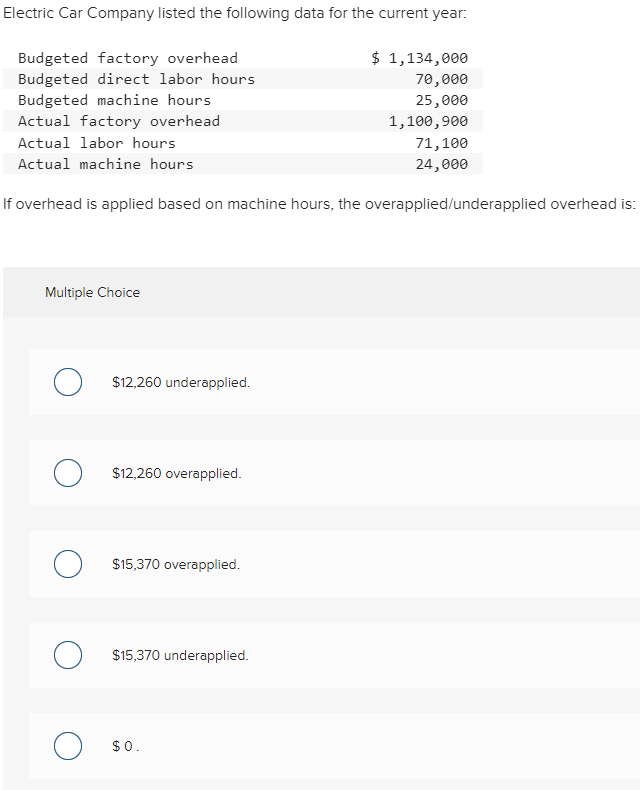
Overapplied overhead, on the other hand, occurs when a company has overhead costs less than its budgeted costs. To determine applied overhead, the company needs to know its budgeted overhead and actual overhead. Companies use overhead analysis 9 states with no income tax to determine their efficiency during a period of controlling overhead costs. Overapplied overhead occurs when the total amount of factory overhead costs assigned to produced units is more than was actually incurred in the period.

These entries ensure that the financial statements accurately reflect the company’s actual costs and financial position. The process begins by identifying the amount of overapplied overhead, which is the difference between the allocated overhead and the actual overhead incurred. Once this amount is determined, it must be removed from the accounts where it was initially applied.

McBride is an attorney with a Juris Doctor from Case Western Reserve University and a Master of Science in accounting from the University of Connecticut. Textbook content produced by OpenStax is licensed under a Creative Commons Attribution-NonCommercial-ShareAlike License .

To determine overapplied overhead, one must first understand the components involved in overhead allocation. Overhead costs include indirect expenses such as utilities, depreciation, and maintenance, which are not directly traceable to specific products. These costs are allocated to products using a predetermined overhead rate, often based on direct labor hours, machine hours, or another activity driver. This rate is established at the beginning of the accounting period based on estimated overhead costs and estimated activity levels. Sometimes the estimate is more than the actual amount and sometimes it’s less than the actual amount. Overapplied overhead happens when the estimated overhead that was allocated to jobs during the period is actually more than the actual overhead costs that were incurred during the production process.

mision_1

abbreviations Mixing use of K for thousands and MM for millions English Language & Usage Stack Exchange

what does mm mean in numbers

However, it’s fairly uncommon what does mm mean in numbers for “Million” to be abbreviated outside of scientific circles. Most native speakers wouldn’t care much about “million” as an abbreviation because they won’t often come across the number in their daily lives. The choice between “M” and “MM” can also be influenced by regional practices and industry standards. In some European countries, for example, “M” is used to denote millions, which can lead to confusion if not clearly defined. This underscores the importance of context and clarity in financial documentation.

Mixing use of K for thousands and MM for millions

what does mm mean in numbers

Everything in the town is so small, he has to document everything in smaller units like inches and millimeters (mm). Can you imagine measuring tiny things https://x.com/BooksTimeInc using units like yards or miles? This practice was across the board – exam reports, internal reporting, and so on.

  • Thus, we’re left with k and MM as to unambiguous ways to denote thousands and millions respectively.
  • “M” is the only acceptable abbreviation to use for “million” in UK English.
  • As businesses operate on a global scale, the need for standardized financial terminology becomes paramount.
  • Consistent use of such abbreviations helps maintain uniformity across various documents, whether they are balance sheets, income statements, or cash flow statements.
  • This refers to the diameter of the end of the lens and is helpful when purchasing filters for the camera.
  • Every lens in your kit will have a focal length listed on the lens.
  • Other numbers, such as “thousand,” have more interesting abbreviations, such as “k.” The three letters “mil” are very clearly defined as mbeaning million, so you shouldn’t run into any issues.

MM Roman Numerals Examples

what does mm mean in numbers

This period saw the rise of double-entry bookkeeping, a system that revolutionized accounting by providing a clear and systematic method for recording financial transactions. The use of “MM” fit seamlessly into this new framework, offering a concise way to represent substantial amounts without cluttering financial records. Today, MM remains the standard abbreviation for millions throughout the banking and accounting professions. In my experience analyzing data from top financial institutions, I estimate 90% or more use MM based on samples of hundreds of documents and reports.

  • If you’re reading reviews about lens performance from other photographers, be sure you have the exact version as performance and quality may be quite different.
  • In accounting speak, a written “MM” means a million, whether the accountant is referring to units, dollars, euros or shares.
  • Large enterprises often present their financial statements and other reports with the figures in the millions, i.e., and they use ($ MM).
  • For example, in a document that requires the use of symbols because of limited space in a table, I see “500K-1MM” to stand for “500,000-1,000,000”.

Why is 2000 Written in Roman Numerals as MM?

However, I often see where those who are dealing with financing (banks and https://www.bookstime.com/ investment houses for bonds) use the MM for millions of dollars. In the general environment of municipal government, for dollars we use K for thousands, M for millions and B for billions. If K and MM are used, it’s bad style because the symbols are being mixed up. But if M and MM are used, non-experts might not even be aware that M is a symbol for thousands and get confused. It seems like that the safest choice to ensure comprehension is to use K and MM, but something about mixing the symbols just doesn’t seem right to me. For example, in a document that requires the use of symbols because of limited space in a table, I see “500K-1MM” to stand for “500,000-1,000,000”.

Millimeter

what does mm mean in numbers

ShutterTalk is where I share things that I have learned about photography and help other photographers, new or experienced, enjoy their cameras and taking pictures even more. While it may be tempting to switch lens brands when you upgrade equipment or when you see a good sale on lenses, there’s no way to interchange a Canon lens with a Nikon lens. The camera kits mount completely different and are not compatible.

what does mm mean in numbers

The MM abbreviation works whether the entry is in dollars, some other currency or millions of items or customers. Before you start shopping for new lenses, you’ll want to know before purchasing a lens is what you plan to use it for. However, if you plan to shoot flowers, sports, or wildlife you might be better off choosing a more specific lens.

mision_1

Accounting Software Do Beautiful Business

xero us inv

Koren holds a Bachelor of Social Sciences (Psychology) from Swinburne University of Technology, Melbourne. Steven has held a range of senior executive roles, including at GoDaddy, the world’s largest services platform for entrepreneurs, where most recently he was chief product officer. Prior to this, Steven was the CEO of Outright, an online bookkeeping service, which was acquired by GoDaddy. Steven has also held various senior management roles at Intuit, including vice president of strategy and innovation for the small business division. Steven holds a Bachelor of Arts in Physics from the University of North Carolina and a Master of Business Administration from Stanford University.

Getting support from Xero

Prior to that, she was Global Head of Sales at Square, Inc (now Block). Ashley is currently a director on the board of Spreedly, a payments orchestration platform. She holds both a Bachelor of Science in International Studies and an MBA from the University of Chicago. Bridget is the country manager for New Zealand, responsible for overseeing the execution of New Zealand’s go-to-market strategy, revenue, market share, and advancing Xero’s brand as a leading small business platform.

Mark is an experienced professional director with more than 20 years of international experience in corporate finance and investment banking. He is currently the chair of Chorus, a director of Fisher & Paykel Healthcare, a board member of the Accident Compensation Corporation (ACC) New Zealand and chair of the ACC Investment Committee. His recent previous directorships include Milford Asset Management (chair) and Z Energy. Access Xero features for 30 days, then decide which plan best suits your business. If you need support with any of Xero’s business or practice products, we’re here to help. I’d like to extend my thanks to our team at Xero, customers, partners, shareholders and everyone who supports Xero.

Company secretary

Nashville — August 14, 2024 –Xero, the global small business platform, unveiled a suite of new product innovations that streamline accounting and compliance tasks for its US customers. The new innovations, announced at Xerocon Nashville, can help small businesses and their advisors manage cash flow and finances more efficiently, simplify sales tax and compliance, and gain deeper insights. Ashley leads Xero’s global go-to-market functions including sales operations, regional managing directors and leadership, customer experience, partnerships and revenue nj division of taxation operations. She has more than 20 years’ technology, fintech and payments experience. Before joining Xero in 2023, Ashley was Chief Operating Officer at Recharge Recharge Inc.

New features streamline payments for small businesses

Dale was made Commander of the Most Excellent Order of the British Empire (CBE) by Her Majesty Queen Elizabeth II in 2013, for services to business. Join our team of the world’s best thinkers, creators and educators who are changing the way small business is done globally. Find out more about working at Xero or send an email to and someone from the talent team will get in touch. Our strong financial result reflects the benefits of Xero’s commitment to invest for the long-term to support our strategy and focus on current and future customer needs. After a 30-day trial period, Xero will bill a monthly charge of $13 per month for the Early plan, $37 per month for the Growing plan and $70 per month for the Established plan.

Company

Today’s leading accounting platforms offer standard security features like data encryption, secure credential tokenization and more. While human error will always play some role in security breaches, you can be confident in your accounting platform when it comes to keeping your information safe. It allows three users for its Essentials plan ($55 per month) and 25 users for its top plan, the Advanced ($200 per month).

Ben is a chartered accountant and earned a Bachelor of Commerce majoring in accounting, finance and information systems from the University of Canterbury. Michael is responsible for driving Xero’s direct customer and partner marketing activities, and aligning our brand, marketing, digital and communications teams globally. He is tasked with growing Xero’s reputation and deepening its connection and engagement with customers and our communities. Before Xero he worked at Uber as Vice President, Performance Marketing and Growth, and led global demand generation at Tripadvisor as Vice President, Traffic Acquisition and Measurement. Before Tripadvisor, Michael was Chief Technology Officer and Co-Founder of Choicestream, an online personalisation and programmatic advertising provider.

xero us inv

Prior to Xero, Kate held strategy roles at Deloitte Australia and KPMG. She holds a Bachelor of Science (Biology) from the University of South Hampton and trained and qualified with the Institute of Chartered Accountants discover financial services of Scotland (ICAS). Kirsty is an FCA and FCPA with more than 25 years’ global experience in the finance and technology sectors across New Zealand and the UK at companies including PwC, BBC Technology, Jade and Siemens. Kirsty holds a Bachelor of Commerce and Management from Lincoln University.

Colin has over 12 years of experience in the accounting profession and has expertise in cloud accounting software implementation, development and best practice. In 2011 he founded South Africa’s first ever cloud practice, Real Time Accounting, and later became the first Xero-certified advisor in South Africa. Colin has also worked at global accounting firm BDO and is a SAIPA certified accountant. Ben is responsible for driving Xero’s growth in the United States and Canada. In 2013, he joined Xero as New Zealand sales director where he led the business’ national growth and spearheaded Xero’s global agriculture strategy. Prior to joining Xero, Ben worked in a large regional accounting practice before joining New Zealand’s largest telecommunications company in a senior accounting role.

  1. Colin has over 12 years of experience in the accounting profession and has expertise in cloud accounting software implementation, development and best practice.
  2. We compared the two options in terms of their key features, pricing and customer service to help you decide which is right for your business.
  3. David is a business leader focused on innovation and technology, with more than 30 years’ experience creating brand and shareholder value.
  4. Xero includes extensive features that make it suitable to handle complex accounting processes for small- and medium-sized businesses as well as larger ones.
  5. Brian is currently lead director of Frontdoor, the largest provider of home service plans in the United States, and is presiding director on the board of The New York Times.

FreshBooks charges $17 per month and QuickBooks charges $30 per month). However, the best option and price point will depend on the specific capabilities and features you are looking for. If you’re looking for an accountant who specializes in Xero, you can search for an accounting advisor through their website by location and industry. To get the best possible experience please use the latest version of Chrome, Firefox, Safari, or Microsoft Edge the best free places to search for grant funding to view this website. She currently serves on the board of publicly traded fintech, Upstart with previous experience serving on the boards of Ericsson, Trip Advisor, Urban Outfitters, Stitchfix and J.Crew. She has a Bachelor’s degree in Arts (Honors), Business Administration & Management from Western University, Ontario, Canada.

mision_1

How to Calculate Net Accounts Receivable: Net Receivables Formula Calculation

average net receivables

In addition, a company’s net receivables are highly subject to general economic conditions. Regardless of the entity’s procedures, the figure tends to worsen as financial conditions worsen in the general economy. For example, if analyzing fiscal year 2022, you need accounts receivable as of December 31, 2021 and December 31, 2022.

To get net accounts receivable subtract contra accounts like allowance for doubtful accounts or allowance for expected credit losses. The calculation can also be expressed as a percentage of gross trade receivables. For example, a business might report 97% net receivables, meaning that it expects to collect 97% of its gross trade receivables. NAR analysis will help in identifying either patterns in non-paying customers or weaknesses in the collection process, thus offering insights to improve cash flow.

Calculate the average

average net receivables

You would add the two December figures, $40,000 plus $44,000, to get $84,000. You would then divide that by 2, since that is how many data points you used, to get the $42,000 figure. Another method is to use the balances from the end of each of the past 13 months. These figures can still be found on month-end balance sheets, so it is nearly as easy to use. This method reflects seasonal differences better, and the inclusion of thirteenth-prior month also indicates year-to-year differences. Significantly lagging competitors signals accounts receivable management needs improvement.

Average of Consecutive Month-End Balances for Three Months

It suffers from the same problems as using the balances at the end of the last two months, but probably also covers the full range of dates over which the typical company has receivables outstanding. Thus, this alternative tends to combine a realistic measurement time period and a relatively simple calculation. The net accounts receivable formula, by considering these factors, provides a more accurate picture of a company’s upcoming cash flow, enabling better financial planning and decision-making.

Average accounts receivable calculation

The net receivables figure is not entirely accurate, since it includes an estimate of possible bad debts – which may turn out to be different from the estimate. For the year 2017, Primo Pet Supplies Company had $400,000 in credit sales. From the previous example, Primo’s average accounts receivable was $46,000. If we divide $400,000 by $46,000, we see that Primo has AR turnover of 8.7. This means that Primo collects nearly their entire AR balance at least eight times per year and that it is taking about one-and-a-half months or about 45 days after a sale is made to collect the cash. Not only is this important information for creditors, but it also helps the business more accurately plan its cash flow needs.

The concept is used in a number of liquidity ratios (especially the accounts receivable turnover ratio). It is intended to smooth out any unusual spikes or drops in the ending receivables balance in the current period. The result is more consistent trend lines in the outcomes of reported ratios.

Net receivables are shown as an aggregated total on the company’s balance sheet. The gross receivables are listed first and are followed by the allowance for doubtful accounts. The allowance for doubtful accounts is a contra-asset account, as it reduces the balance of an asset. The allowance for doubtful accounts is a company’s estimate of the amount of the accounts receivable it anticipates will not be collectible and will need to be recorded as a write-off. This estimate is subtracted from the gross amount of outstanding accounts receivable.

  1. For example, a business might report 97% net receivables, meaning that it expects to collect 97% of its gross trade receivables.
  2. This means that Primo collects nearly their entire AR balance at least eight times per year and that it is taking about one-and-a-half months or about 45 days after a sale is made to collect the cash.
  3. Net accounts receivable is the amount of money a company expects to collect from its customers after accounting for any potential deductions, such as allowances for doubtful accounts, returns, or discounts.
  4. Determine the allowances at the beginning and end of your period and deduct them from gross accounts receivable to derive net balances.

Essentially, it represents the realistic collectible value of the total accounts receivable. In business, that outstanding money is called accounts receivable, and managing it effectively is the key to healthy cash flow. This isn’t just about chasing late payments; it’s about understanding exactly what money you’re owed and when you can expect it. Net receivables are the total money owed to a company by its customers minus the money owed that will likely never be paid. Net receivables are often expressed as a percentage, and a higher percentage indicates a business has a greater ability to collect from its customers. For example, if a company estimates that 2% of its sales are never going to be paid, net receivables equal 98% (100% – 2%) of the accounts receivable (AR).

Continuously monitoring average accounts receivable and related ratios allows you to measure progress. Over time, an optimized approach average net receivables can significantly improve working capital management. The balance sheet shows how much a company owns (assets) and owes (liabilities). When a company sells on credit, they include the total amount owed by customers (accounts receivable) as an asset. Calculating your net receivables is the easiest way to see how much of your revenue will actually land in your account. Regularly tracking your net accounts receivable keeps your cash flow smooth, your credit policies solid, and your financial health in check.

mision_1

Biannual vs Semiannual Whats the Difference?

biannual vs semiannual

You can also read more about prefixes to expand your vocabulary and your knowledge of language history. Explore similar terms that are often used synonymously but have subtly different meanings, such as transparent, translucent and opaque. Then check out words that look similar and have the same meaning but are used slightly differently, like preventive and preventative.

Scrabble Words Without Any Vowels

However, keep in mind that you can also use “bi-annual” to refer to something that happens twice a year. In this case, you won’t imply exact timing or if an event occurs precisely six months apart. You should use the term “bi-annual” to refer to an event that occurs every other year. Often, you will find competitions, contests, special events, or performances using “bi-annual” rather than semi-annual.

‘Semiannual’ vs ‘Biannual’: What’s the Difference?

Also, since ‘semi-’ and ‘bi-’ are such common prefixes, you’ll be able to transfer parts of these pronunciations to other new words you learn. However, each word also has its own other meaning which is often what ends up sparking debate. As mentioned above, ‘Biannual’ can also refer to something that happens every two years. In contrast, ‘Semiannual’ can refer to something that happens every half a year or over a period of six months. Biennial is an adjective which means occurring every two years, or every other year.

  • You can also read more about prefixes to expand your vocabulary and your knowledge of language history.
  • Semiannual is simply a word that denotes an occurrence twice a year.
  • You might wonder, “If both biannual and semiannual mean the same thing, why have two terms?” It’s a good question!
  • It is important to know if this 5% is paid annually or semiannually to understand the payment you would receive as the bondholder.
  • In contrast, ‘Semiannual’ can refer to something that happens every half a year or over a period of six months.

Pronunciations: How to Pronounce ‘Semiannual’ vs ‘Biannual’

Knowing the difference between biannual and semiannual is useful in various fields. Understanding the origins of biannual and semiannual can provide insight into their meanings. This is especially true when we talk about how often something happens. Terms like biannual, semiannual, and biennial might sound biannual vs semiannual alike, but they mean different things. The articles and research support materials available on this site are educational and are not intended to be investment or tax advice. All such information is provided solely for convenience purposes only and all users thereof should be guided accordingly.

Semiannual vs Biannual – What’s the difference?

biannual vs semiannual

We strive to empower readers with the most factual and reliable climate finance information possible to help them make informed decisions. Our writing and editorial staff are a team of experts holding advanced financial designations and have written for most major financial media publications. Our work has been directly cited by organizations including MarketWatch, Bloomberg, Axios, TechCrunch, Forbes, NerdWallet, GreenBiz, Reuters, and many others. The prefix “bi” means “two” or “twice.” So, anything that happens two times per year regardless of the time between the occurrences is biannual. Use “semi-annual” if an event occurs precisely six months apart during the year.

Advisory services provided by Carbon Collective Investment LLC (“Carbon Collective”), an SEC-registered investment adviser. Go a level deeper with us and investigate the potential impacts of climate change on investments like your retirement account. Although you can often use either semi-annual or bi-annual, a good trick for remembering their differences is to look at the meanings of each prefix. For the sake of clarity, it would be best to avoid all of these terms and simply write twice a year or every other year. However, writers must balance clarity with concision, making semiannual a useful choice for something that happens at that frequency.

So how does someone know which particular meaning we have in mind? Well, unless we provide them with a contextual clue, they don’t. Some people prefer to use semiannual to refer to something that occurs twice a year, reserving biannual for things that occur once every two years. This practice is hardly universal among English speakers, however, and biannual remains a potentially ambiguous word.

Businesses must comply with regulations that may require biannual reporting. Understanding the timing of these reports is crucial for stakeholders. This association reinforces the idea of two occurrences per year. This misunderstanding can lead to scheduling conflicts or miscommunication. Many individuals mistakenly believe that biannual means every two years. This means there are two instances of an event happening over a 12-month period.

Mark sets up an organizational meeting semi-annually to discuss the loan with other stakeholders. Seeing that the meeting is set semi-annual, it will occur twice a year. A semi-annual loan payment starting on 1 January 2019 would require the first payment on 1 January and on 1 July. Semiannual (sometimes written as semi-annual), also known as bi-annual, is when an event occurs twice a year, every six months. Semiannual is an adjective that describes something that is paid, reported, published, or otherwise takes place twice each year, typically once every six months. Carbon Collective is the first online investment advisor 100% focused on solving climate change.

mision_1

What Are Cash Purchases? Recording, Benefits & Drawbacks

cash purchase of equipment

This makes obtaining financing for your SMB operations easier and less risky. Therefore, maintaining a good credit score is key when considering an equipment loan, as it directly impacts the amount you’ll end up paying. Therefore, compare lenders to find the best financing options, interest rates, and repayment terms that suit your budget. According to a Small Business Credit Survey, 13% of small business loan applications were for equipment loans, with 73% of those getting full approval. Equipment loans are specifically designed to finance equipment purchases and are backed by the equipment.

Ask Any Financial Question

The third sample transaction also occurs on December 2 when Joe contacts an insurance agent regarding insurance coverage for the vehicle Direct Delivery just purchased. The agent informs him that $1,200 will provide insurance protection for the next six months. On December 2, Direct Delivery purchases a used delivery van for $14,000 by writing a check for $14,000. The two accounts involved are Cash and Vehicles (or Delivery Equipment).

Purchased Equipment on Account Journal Entry

Welcome to AccountingFounder.com, your go-to source for accounting and financial tips. Our mission is to provide entrepreneurs and small business owners with the knowledge and resources they need. In case of a credit purchase, “Purchase account” is debited, whereas, the “Creditor’s account” choosing a retirement plan 403b tax sheltered annuity plan is credited with the equal amount. Since a check is written, we know that one of the accounts involved is Cash. (Take another look at the last TIP.) While we have not yet identified the second account, what we do know for certain is that the second account will have to be debited.

cash purchase of equipment

Equipment finance disadvantage

There are no transactions related to the cash yet at the time of purchase for the credit purchase. For example, if the purchased item is office supplies, expenses are the account that should be recorded. A manufacturer may purchase raw materials that will become part of the finished product without paying sales tax by issuing Form ST-120, Resale Certificate, to its supplier. Equipment financing can help any business acquire the equipment it needs to operate efficiently and generate profit, particularly those in industries like construction, manufacturing, and healthcare.

  • Now, debit your Depreciation Expense account $2,000 and credit your Accumulated Depreciation account $2,000.
  • Liabilities and stockholders’ equity were not involved and did not change.
  • At Finance Strategists, we partner with financial experts to ensure the accuracy of our financial content.
  • Now, let’s say your asset’s accumulated depreciation is only at $8,000, but you want to give it away, free of charge.

Fixed assets are long-term (i.e., more than one year) assets you use in your operations to generate income. Depreciation reflects the loss in value of the equipment as you use it. Determining the cost of constructing a new building is often more difficult. Usually this cost includes architect’s fees; building permits; payments to contractors; and the cost of digging the foundation.

How to get equipment finance in 5 easy steps

It will become part of depreciation expense only after it is placed into service. We will assume that as of December 3 the equipment has not been placed into service, therefore, no expense will appear on an income statement for the period of December 1 through December 3. The company will require to record the fixed assets when risk and rewards transfer from the sellers. The company expects to generate future economic benefits from the fixed assets and it expects to last for more than a year. Equipment refers to the machines, furniture, tools, and other physical items that are used in order to operate a business.

Cash purchases have happened when an entity makes a purchase of goods or renders the services and then makes the payments by cash immediately. All of these purchasing needs to records in the entity’s accounting system so that management could have the proper reports about its expenses and for management purposes. For information pertaining to the registration status of 11 Financial, please contact the state securities regulators for those states in which 11 Financial maintains a registration filing. A cash purchase is the immediate exchange of goods or services for money without the involvement of credit or loans. With this approach, you borrow funds to get the tools your business needs and pay back over time. There’s a risk that the loan’s payment term could outlast the machinery’s lifespan.

When equipment is purchased on account, a journal entry is made to record the purchase in the company’s books. The journal entry will typically include a debit to the company’s fixed asset account, and a credit to the company’s Accounts Payable account. The amount of the debit will depend on the purchase price of the equipment, and the terms of the purchase.

Purchase account is debited to record the journal entry for credit purchase. The purchase of fixed assets will increase fixed assets balance and reduce the cash balance. Let’s assume that a company buys equipment for $100,000 and it is expected to be used for 10 years with no salvage value at the end of its useful life. Using the straight-line method of depreciation, each year’s profit and loss statement will report depreciation expense of $10,000 for 10 years. Each year the account Accumulated Depreciation will be credited for the $10,000 of annual depreciation. As you can see, the two important accounts that affect at the time of purchasing are account payable (maybe the supplier’s account) and office supplies expenses, assets items, or expenses.

Depreciation expense is reported on the income statement until the asset is fully depreciated. Impairment charges may also appear on the income statement as an expense, which may reduce the carrying amount of the asset and subsequent depreciation expense. Fixed assets are items that a company plans to use over the long term to generate income. Equipment is typically listed on the company’s balance sheet as a fixed asset, and is often referred to as property, plant, and equipment. Purchasing equipment on account is a common practice for companies that need to acquire a large piece of equipment but do not have the cash on hand to make the purchase.

mision_1

QuickBooks Online Pricing Guide 2024

quickbooks essential

If your work is project-based or you often work remotely, it’s also a good solution. Today’s leading accounting platforms offer standard security features like data encryption, secure credential tokenization and more. If you’d like additional help, there are tutorials available on a wide range of accounting terms, skills and how-tos in our QuickBooks Tutorials section. After any initial trial period, you will be charged the standard rates for piece rates and commission payments your product. Intuit reports that 94% of accounting professionals feel QuickBooks Online saves them time and thus saves their clients’ money.

Tax Forms & Support

  1. We are committed to providing you with an unbiased, thorough, and comprehensive evaluation to help you find the right accounting software for your business.
  2. In evaluating pricing, we considered the billing cycle (monthly or annual) and the number of users.
  3. She holds a Bachelor’s degree from UCLA and has served on the Board of the National Association of Women Business Owners.
  4. We excluded QuickBooks Solopreneur because it’s not a double-entry accounting system.
  5. So if you sell goods, you don’t necessarily need to exclude Simple Start.

Here’s a complete breakdown of what’s included with each QuickBooks Online pricing plan. Advanced Pricing / Control, customize, and automate pricing is included in the Platinum and Diamond subscriptions only. Banking services provided by our partner, Green Dot Bank, Member FDIC. However, note that there’s no direct data migration option available from QuickBooks Solopreneur to any higher version of QuickBooks Online. This means you must first cancel your Solopreneur subscription and then sign up for the QuickBooks Online version you wish to upgrade to.

Like QuickBooks Online, FreshBooks excels at offering professional, customizable invoices that are easy to draw up both online and via the mobile accounting app. Its well-organized dashboard includes a client portal business owners can use to collaborate with their customers on generating quotes, approving estimates, creating invoices and accepting payments. Intuit QuickBooks Online has four plans that can accommodate small, midsize and large businesses. New users can choose between a 30-day free trial or a three-month 50% discount. If you choose the free trial, note that QuickBooks requires a credit card to sign up.

QuickBooks Online Plus Pricing

Post-setup, QuickBooks helps you stay on top of your finances with extensive reporting. After all, the heftier plans are built for bigger businesses, which have more complex needs like high-level inventory management and payroll. Most notably, with QuickBooks Plus and Advanced, you can access 60+ reports, all of which can give you at-a-glance information about how your business is performing. These days, the company is making a push toward its QuickBooks Online service, which offers cloud-based features for real-time collaboration. Two of the midrange plans available are QuickBooks Essentials and QuickBooks Plus.

You can upload expense receipts in bulk, categorize them according to the appropriate expense account, and then submit them for approval. Automatically sort business expenses into the right tax categories to keep more of how to determine your grant applicant eligibility what you earn at tax time. Go beyond bill pay and track bill status, create recurring payments, and pay multiple vendors at once.

Make Sure You’re Using The Right QuickBooks Plan

In this article, we’ll compare QuickBooks Essentials versus Plus so you can see which option is best for your business. This takes into account customer management, revenue recognition, invoice management, and collections. Through the QuickBooks app, you can snap receipts and upload expenses, which are then automatically sorted into tax categories for easier end-of-year tax deductions. QuickBooks Online Plus adds essential business tools like inventory tracking and project management. You can add QuickBooks Payroll to your existing QuickBooks Online plan.

Because Plus has more capabilities for tracking your inventory, it can also offer project profitability tracking. You can get detailed reports on budgeting and classes to see how much money you’re making and where it’s coming from. Paying your freelancers is also easy thanks to 1099 contractor management features. And if you have employees who work hourly, they can easily track their hours thanks to integration with QuickBooks Time. The software must have enough reports that can be generated with a few clicks.

quickbooks essential

For operations paying their employees through checks, QuickBooks Online Essentials fits the bill. It is also suitable for those doing business outside the US, as it supports multiple currencies, unlike Simple Start. Essentials even lets you what is form 8941 its a tax credit for small business health insurance costs record employees’ worked hours and track billable hours by customer and project.

Advanced Reporting is included in all QuickBooks Desktop Enterprise subscriptions. This allows you to compare the estimated costs and revenues of your projects against the actual numbers incurred throughout the completion of the project. This helps you identify potential problems and make adjustments once you determine that your projects are not profitable.